

Campervan how-to
Motorhome Hire in NZ: How to Choose the Right Size Van
18 November 2026 · Elements RV World
Home · Travel tips · Motorhome Hire in NZ: How to Choose the Right Size Van
The best mornings on a New Zealand road trip start simply: a brew in the van, a quiet bay or a beech forest just outside the door, and no hotel checkout to race. For motorhome hire in NZ, the van that gets you those mornings is the one that fits your group, not the biggest one on the lot. Start with how many people are travelling, then decide whether you need a bathroom on board, and where you want to pick up. A 2-berth suits couples. A 4-berth suits a small family or a group of friends. A 6-berth suits five or six people. Most travellers start from Auckland Airport or Christchurch Airport, and it's worth checking whether kilometres, bedding and cooking gear are included in the rate.
This guide walks through those choices, then shows how they map to Elements RV World's New Zealand fleet. Those four vans are automatic, come with unlimited kilometres, and pick up from Auckland Airport or Christchurch Airport, so the first day's drive can start as soon as you land.
How do you choose the right size motorhome?
Compare vans by berths first (how many people can sleep in them), then by layout. That's the difference between a comfortable week and a squeeze:
- 2 berth: one double bed. Best for couples or a solo traveller. Compact models are easier to park; higher-roof models may add a shower and toilet.
- 4 berth: two double beds. Suits a small family or two couples, without the length of a large motorhome.
- 6 berth: three double beds and more living space. Suits a family or group of five or six.
Elements' New Zealand fleet follows that pattern: the Tandem and Tandem Deluxe are 2 berth, the Quad is 4 berth, and the Sixer is 6 berth. The compare campervans page lists beds, water tanks, power, heating and fuel side by side.
What's the difference between a compact 2-berth and one with a bathroom?
For two people, the main choice is whether you want a bathroom on board, or you're happy using holiday-park facilities and travelling a bit lighter.
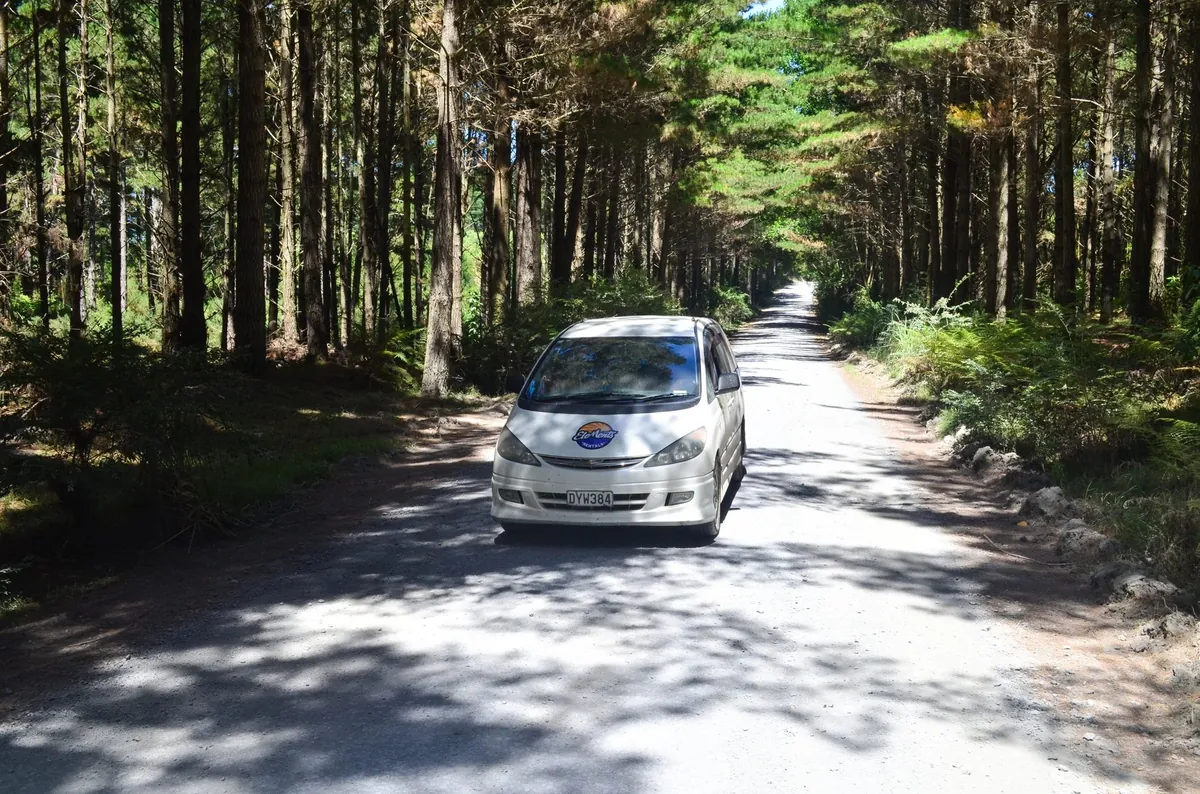
The Tandem is a compact Toyota Estima with a 2.4L petrol engine — the sort of van you can ease into a small-town car park or along a tight bush road without a second thought. The tailgate lifts to reveal a kitchen with a gas cooker and a sink with a 24L water tank, and at night the seats fold down into a double bed. It's easier to park on narrow roads, and because it runs on petrol, road user charges don't apply.
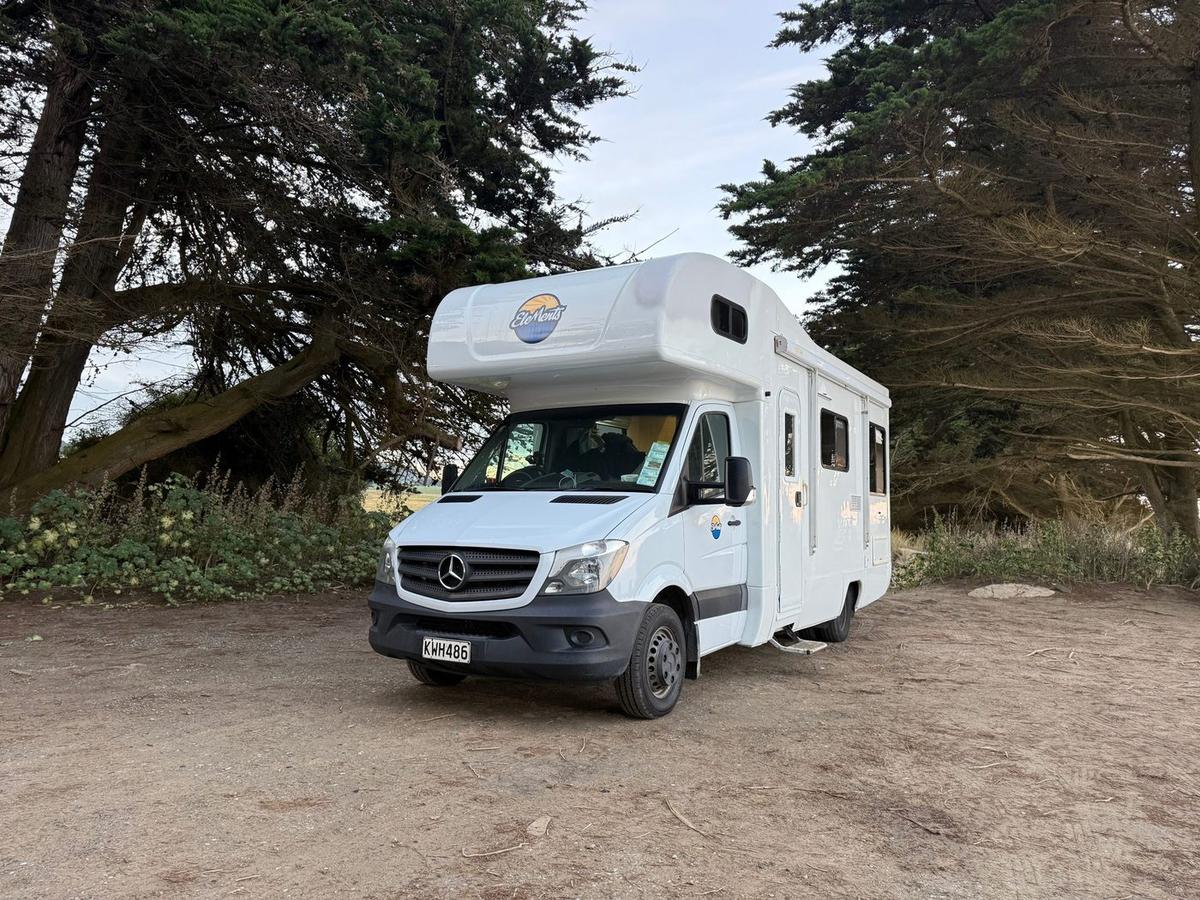
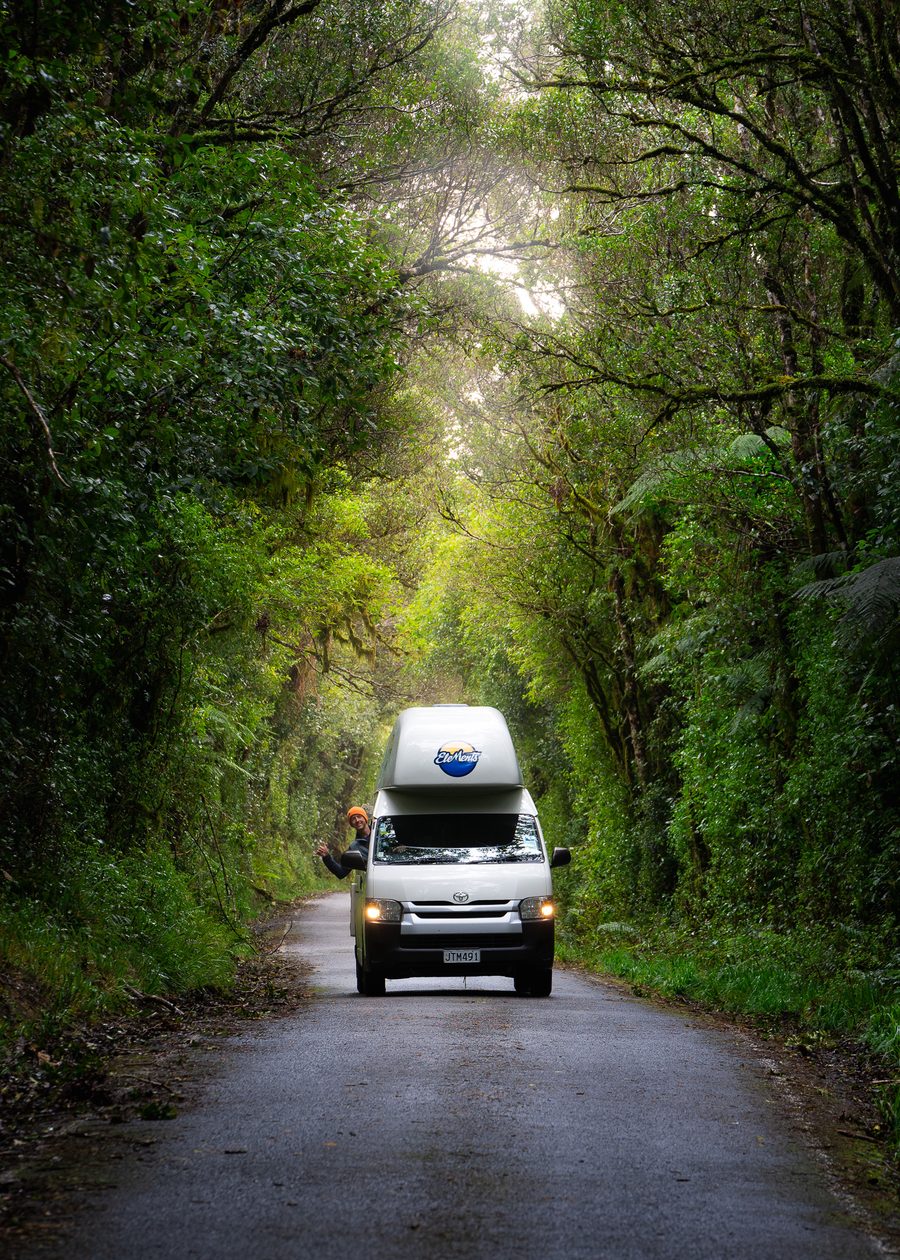
The Tandem Deluxe is a high-roof Mercedes-Benz Sprinter with its own shower and toilet, gas heating, air conditioning, an 80L fridge/freezer and 12v/240v power. Choose this layout if you'd rather wake up, put the kettle on, and not plan every night around shared facilities.
What size van suits families and groups?
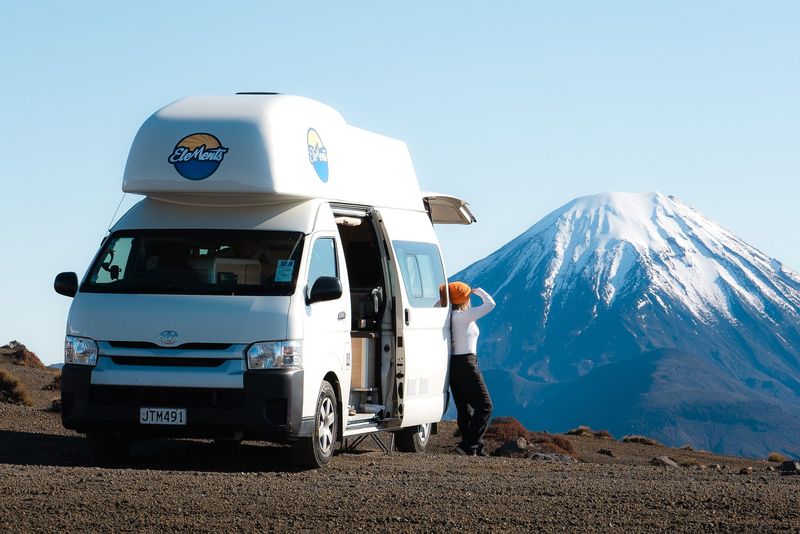
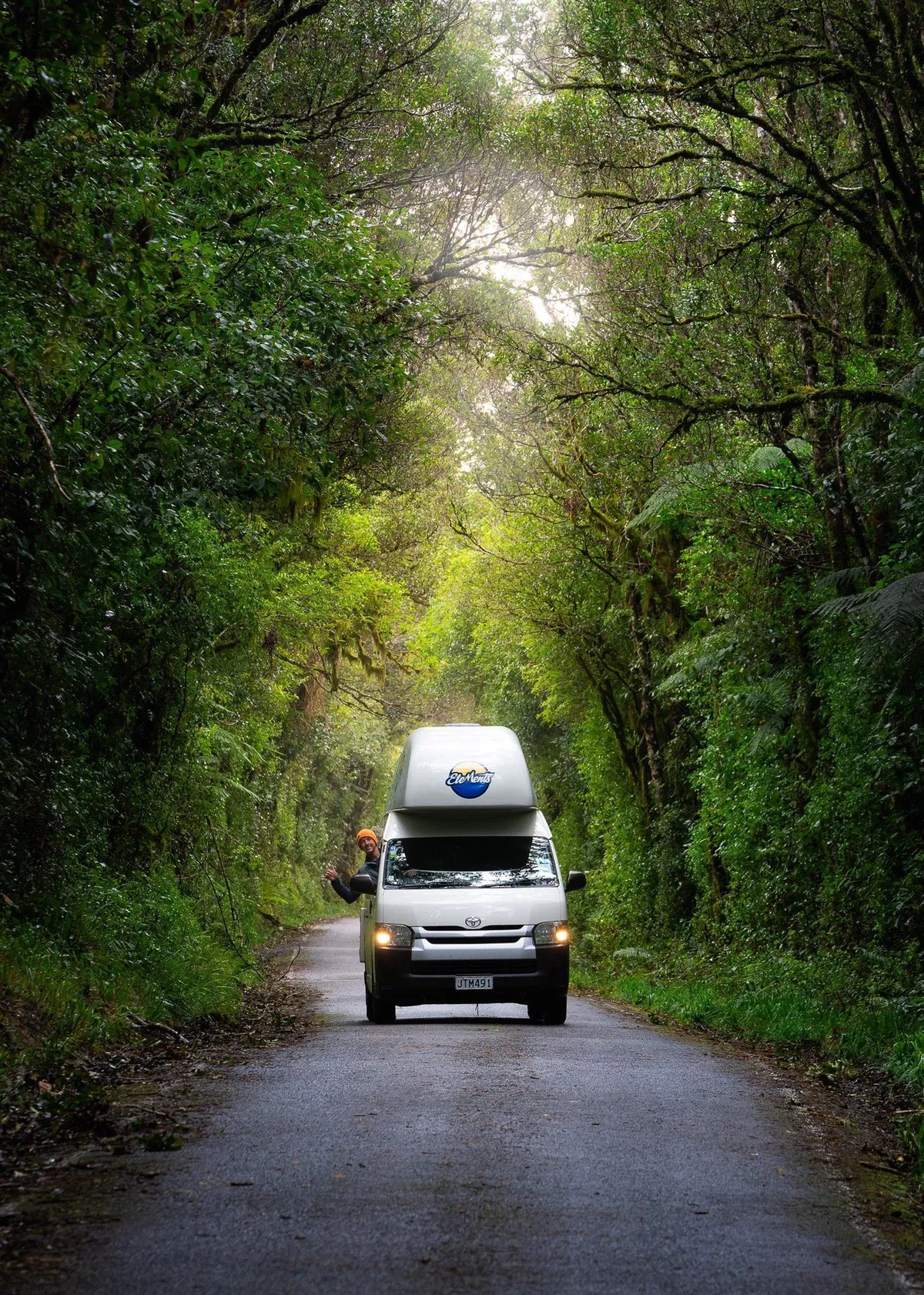
For up to four people, look for two double beds and enough headroom to stand and cook. The Quad, a Toyota Voyager T540, is built that way, and a heating option is available for the winter months — useful when a South Island evening turns sharp.
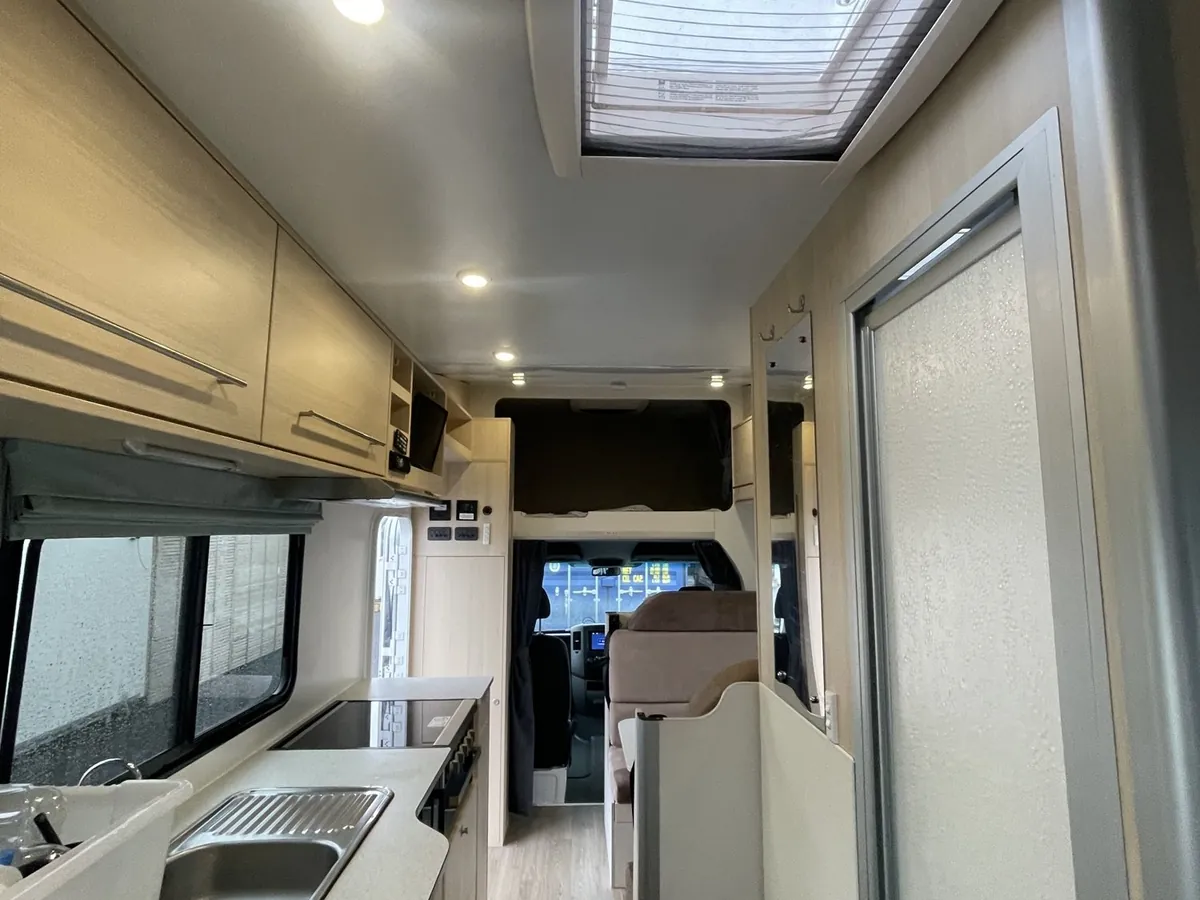
For five or six, you need more beds and a bigger kitchen — space to sit down together after a long drive, not just somewhere to sleep. The Sixer, a Mercedes-Benz Sprinter motorhome, has six seats, three double beds, a 130L fridge/freezer, a gas stove, oven and microwave, dining tables front and rear, plus a shower and toilet.
Do you need a van with a shower and toilet?
Not always. Plenty of travellers stay at holiday parks and campsites with shared facilities, and DOC alone runs more than 320 campsites across the country. A shower and toilet on board matters most if you want the freedom to stop when a quiet bay or a late arrival says so, rather than planning every night around a booked site.
Some freedom camping spots are restricted to certified self-contained vehicles. Under the current rules, a vehicle needs a green warrant to be certified self-contained, the toilet must be permanently fixed in the vehicle, and the warrant card must be displayed when you camp at a self-contained-only site (see DOC's freedom camping page and the Plumbers, Gasfitters and Drainlayers Board). Certified vehicles are listed on the national self-contained vehicles register. Certification isn't permission to camp anywhere, so always check the signs and local rules.
All four Elements NZ vans are certified self-contained, with a toilet permanently fixed in the vehicle. If you plan to freedom camp, say so when you book so the current warrant can be confirmed.
What's usually included in a New Zealand campervan hire?
Inclusions vary by company, so compare the rate as well as the daily price. A typical hire should be clear about kilometres, extra drivers, roadside assistance, and whether bedding and cooking gear are already on board — the things that decide whether you can leave the airport and start cooking that night.
Elements' New Zealand hires include:
- Unlimited kilometres
- 24/7 roadside assistance
- No extra driver fees
- Linen, cutlery, crockery and cooking gear already on board
- Free maps
One extra cost to plan for on diesel vans is road user charges. On this fleet, the Tandem Deluxe, Quad and Sixer are diesel; the Tandem runs on petrol, so road user charges don't apply. Direct bookings also lock in the confirmed rate under a price guarantee. The full booking rules are in the New Zealand terms.
How do pick-up and drop-off work at Auckland and Christchurch airports?
At Elements, pick-up and drop-off are 24/7 and contactless at both depots, which helps if your flight lands late. Staffed branch hours are Monday to Friday, 8:30am to 4:00pm. There are no airport transfers or shuttles, so plan how you'll get to the depot.
- Auckland Airport depot: 14 Timberly Road, Māngere. From here you can head north to Northland or south to the Coromandel for the first night.
- Christchurch Airport depot: 20 Ron Guthrey Road, Christchurch Airport. The Southern Alps, Lake Tekapo and Queenstown sit to the west; Kaikōura is up the coast.
When should you book a motorhome for a New Zealand summer?
December to February is peak season. That's when the long evenings are at their best, and popular sizes and dates go first, so it pays to book early. For an Elements hire, a free instant quote takes a few minutes and needs no payment. Direct bookings need a 10% deposit, and cancelling 31 or more days before pick-up gets a full refund, less non-refundable card fees. The full details are in the New Zealand terms. Seasonal offers, if any, are listed on the campervan deals page.
Motorhome hire NZ: frequently asked questions
What licence do I need to hire a campervan in New Zealand?
For an Elements hire, the minimum age is 18. You need a full licence, or an NZ restricted licence if its conditions are met. Learner licences aren't accepted. A non-English licence needs a translation or an international driving permit.
Can I pick up in Auckland and drop off in Christchurch?
One-way hires are available subject to approval and are quoted at booking. There is no fixed one-way fee.
Do I have to pay road user charges?
Only on the diesel models: the Tandem Deluxe, Quad and Sixer. The Tandem runs on petrol, so no road user charges apply.
What insurance options are there?
Elements offers Risky Business, which has no daily fee and a bond, or No Worries, which has a $0 bond and a daily cost that depends on the vehicle. Current amounts are on the FAQs page.
If you've settled on a size, get a free instant quote for Auckland Airport or Christchurch Airport, or call +64 9 950 2569.
Written by the Elements RV World team.